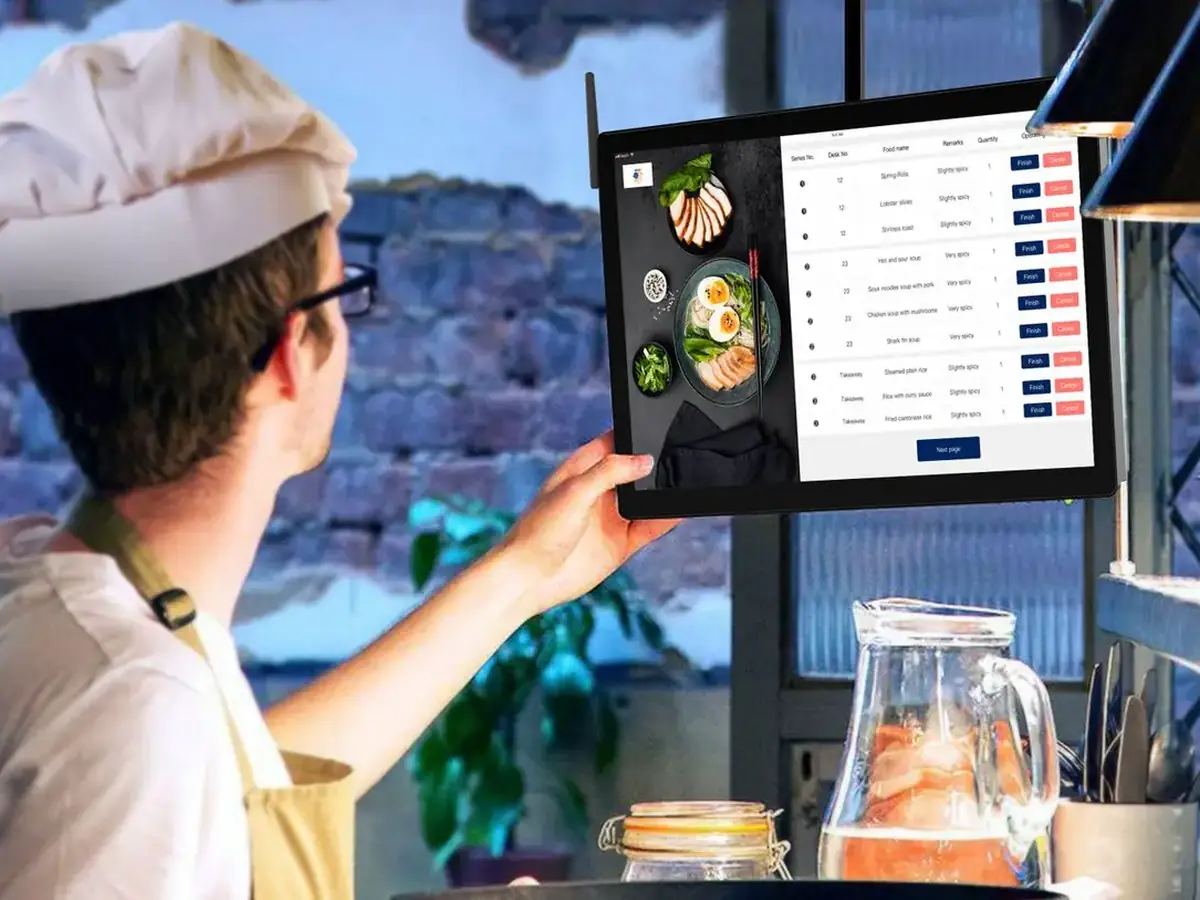
Cloud kitchen, ghost kitchen, dark kitchen, virtual restaurant
The terms overlap and are often used interchangeably. A common distinction: a ghost kitchen (or dark kitchen) is the delivery-only operation; a cloud kitchen often means the shared facility that rents kitchen stations to several brands; a virtual restaurant is the brand customers see in the apps, which can run out of any licensed kitchen, including an existing restaurant (Otter, What is a ghost kitchen; Uber Eats Canada, What is a virtual restaurant). Because searchers use them as synonyms, this guide covers all of them.
| Model | What it is | Good for |
|---|---|---|
| Virtual brand in your restaurant | A second, delivery-only menu cooked in your existing kitchen | Using idle capacity; lowest cost |
| Shared / commissary kitchen | Rented station or hours in a licensed shared kitchen | Testing a concept before a lease |
| Cloud kitchen facility | Multi-tenant delivery kitchen with pickup area for drivers | Launching fast in a dense area |
| Your own delivery-only unit | Leased kitchen you fit out yourself | Full control once demand is proven |
Licences and health rules by province
Restaurants and food service in Canada are inspected by provinces, municipalities or regional health authorities (NJC, food inspection authorities by province). A delivery-only kitchen is still food service. The core rules in the four largest provinces:
- Federal: a CFIA Safe Food for Canadians licence is generally not needed by restaurants and other food service that sell directly to consumers (CFIA, activities that need an SFCR licence). Some online guides say otherwise; check the CFIA page for your exact activity.
- Municipal: zoning, business licence, building and fire permits vary by city. Ask your city before signing a lease.
- Home kitchens: rules differ sharply. Quebec allows meal preparation in a home kitchen with a restaurant permit, up to 100 kg of food a month and direct sales only; other provinces and cities may not allow it at all.
- Sales tax: register for GST/HST (and QST in Quebec). In Quebec, restaurant billing rules (SRS / WEB-SRM) apply to restaurant sales; see Revenu Québec, restaurant sector (SRS / WEB-SRM).
| Province | Before you open | Training rule |
|---|---|---|
| Ontario | Notify your local medical officer of health before operating a food premise (many health units ask for 14 days’ notice). In Toronto, notify Toronto Public Health. | At least one certified food handler or supervisor on site every hour you operate (O. Reg. 493/17, s. 32). |
| British Columbia | Floor plans approved and a health operating permit from your regional health authority; permits are not transferable. | Operator holds FOODSAFE Level 1 or equivalent; one certified employee present when the operator is away. |
| Alberta | Food handling permit from Alberta Health Services after an approval inspection. | A person with an approved food safety certificate in care and control; with six or more food handlers on site, a certified supervisor must be present. |
| Quebec | MAPAQ restaurant permit (permis de restauration), tied to the place and the operator. Check with the municipality first that food business is allowed at the address. | MAPAQ food hygiene training (manager and handler) as applicable. |
Ghost kitchens in Toronto, Montreal and Winnipeg
- Toronto: Ontario rules apply; notify Toronto Public Health before operating (Ontario Reg. 493/17 (Food Premises); City of Toronto, Starting a food business).
- Montreal: you need the MAPAQ restaurant permit, but inspections on the island are done by the Ville de Montréal on MAPAQ’s behalf (Ville de Montréal, Food inspection).
- Winnipeg: register with Manitoba public health and get a permit before opening (submit your menu and floor plan); a certified food handler must be on staff or on duty depending on team size (Manitoba, food handling establishment permits; Manitoba, Certified Food Handler Training).
What a cloud kitchen costs to run
Rent and fit-out vary too much by city to quote one number. What you can calculate exactly is the fee on each order, because the delivery apps publish their Canadian rates. On a delivery-only business those fees apply to almost all of your revenue:
| Channel ($30 delivery order) | Fee rule (published) | Fee on $30 |
|---|---|---|
| Uber Eats Lite / Plus / Premium | 20% / 25% / 30% | $6.00 / $7.50 / $9.00 |
| DoorDash Basic / Plus / Premier | 20% / 25% / 29% | $6.00 / $7.50 / $8.70 |
| Your own ordering page, card fee only | 2.9% + C$0.30 (Stripe standard) | $1.17 |
| Your own page + DoorDash Drive delivery | card fee + $8.50 flat | $1.17 + $8.50 |
Arithmetic on published rates (Uber Eats Canada merchant pricing; DoorDash Canada merchant pricing; Stripe Canada pricing; checked 27 October 2026). App fees exclude tablet fees, promotions and refunds; your own channel excludes your monthly software fee ($35 for Chefzi) and any delivery you run yourself.
How to start a cloud kitchen in 7 steps
- Pick a menu that travels: 20 minutes in a bag without going soggy.
- Choose the kitchen model (table above) and confirm zoning with the city.
- Apply for the health permit or notification in your province and book training.
- Register the business, GST/HST and, in Quebec, QST.
- List on one or two delivery apps for discovery (Uber Eats suggests testing delivery before adding a virtual brand).
- Open your own ordering page so repeat customers order without a commission, and add your web address to every bag.
- Track net payout per order by channel, not gross sales.
Apps for discovery, your own channel for regulars
A ghost kitchen has no street presence, so apps are often the only way new customers find it. The risk is that every repeat order pays the same commission as the first. A direct ordering page with delivery via Uber Eats or DoorDash Drive couriers (built into Chefzi) or your own drivers turns regulars into orders where you pay a card fee and a delivery fee instead of a percentage. Compare in delivery platforms for restaurants and Uber Eats vs DoorDash vs Skip.
Where Chefzi fits
Chefzi is a commission-free online ordering system for Canadian restaurants: your own ordering page in English and French, for a flat $35 a month. For a delivery-only brand it gives you a direct channel from day one, with the customer’s contact details on every order. If that sounds useful, book a 15-minute demo and we will show you your own menu in it. No pressure if you are just researching.
Sources
Ontario Reg. 493/17 (Food Premises); City of Toronto, Starting a food business; BC Food Premises Regulation; BC, permits and licences; Alberta Health Services, Starting a food business; AHS, food safety training requirements; Québec.ca, permis de restauration (MAPAQ); CFIA, activities that need an SFCR licence; NJC, food inspection authorities by province · Otter, What is a ghost kitchen; Uber Eats Canada, What is a virtual restaurant; Square Canada, Ghost kitchens · Uber Eats Canada merchant pricing; DoorDash Canada merchant pricing; Stripe Canada pricing; checked 27 October 2026
Multi-brand ghost kitchens
Yes. Chefzi supports multi-brand ghost kitchens: run several brands from one kitchen, each with its own menu and ordering page, with orders arriving in one place.
Frequently asked questions
What is a cloud kitchen?
A delivery-only commercial kitchen with no dining room. The term often refers to a shared facility that rents stations to several food brands; “ghost kitchen” usually means the delivery-only operation itself.
Is a ghost kitchen the same as a cloud kitchen?
Mostly. Many sources use them as synonyms. Where they differ, cloud kitchen means the facility and ghost kitchen means the delivery-only restaurant that may operate inside it.
Do I need a licence for a ghost kitchen in Canada?
Yes, it is food service. You need your province’s health permit or notification (for example a BC health operating permit, an Alberta food handling permit, a MAPAQ restaurant permit in Quebec, or notice to the medical officer of health in Ontario), plus city zoning and business licences.
Can I run a cloud kitchen from home in Canada?
It depends on the province and city. Quebec allows meals from a home kitchen with a restaurant permit, up to 100 kg of food a month and direct sales only. Elsewhere, ask your health unit and city before you start.
Do I need a CFIA licence?
Generally not, if you sell food directly to consumers as a food service business. Check the CFIA list of activities that require a Safe Food for Canadians licence.
How do ghost kitchens get customers?
Mostly through delivery apps at first. To protect margin, move repeat customers to your own ordering page, where you pay a card fee instead of a 20–30% commission.
How does a ghost kitchen work?
Orders come in through delivery apps or the brand’s own ordering page, the kitchen cooks them, and a courier picks them up. There is no dining room.
What does ghost kitchen mean?
A ghost kitchen is a delivery-only kitchen with no dining room. It may run one or several virtual brands.
Can a cloud kitchen be profitable?
It can, but there is no reliable Canadian average to quote. Profit depends on rent, food cost, labour and above all channel costs: on a marketplace you pay commission on every order (Uber Eats Canada lists 15–30% on delivery plans, see Uber Eats Canada merchant pricing). Put your own numbers into our commission calculator.
Does Chefzi support multi-brand ghost kitchens?
Yes. Chefzi supports multi-brand ghost kitchens: run several brands from one kitchen, each with its own menu and ordering page, with orders arriving in one place.